

Orchard (also known as Orchard Careers) is an AI driven career and college exploration platform engineered primarily for high school students, with functional utility extending down into middle school environments. Designed to alleviate the acute strain on secondary school counseling departments, the platform serves as a modern bridge between independent student exploration and counselor oversight. Rather than acting as a static directory of job descriptions, Orchard employs conversational AI workflows to help students reflect on their tangible interests, weigh alternative pathways, and make thoroughly informed decisions regarding postsecondary education and career trajectories.
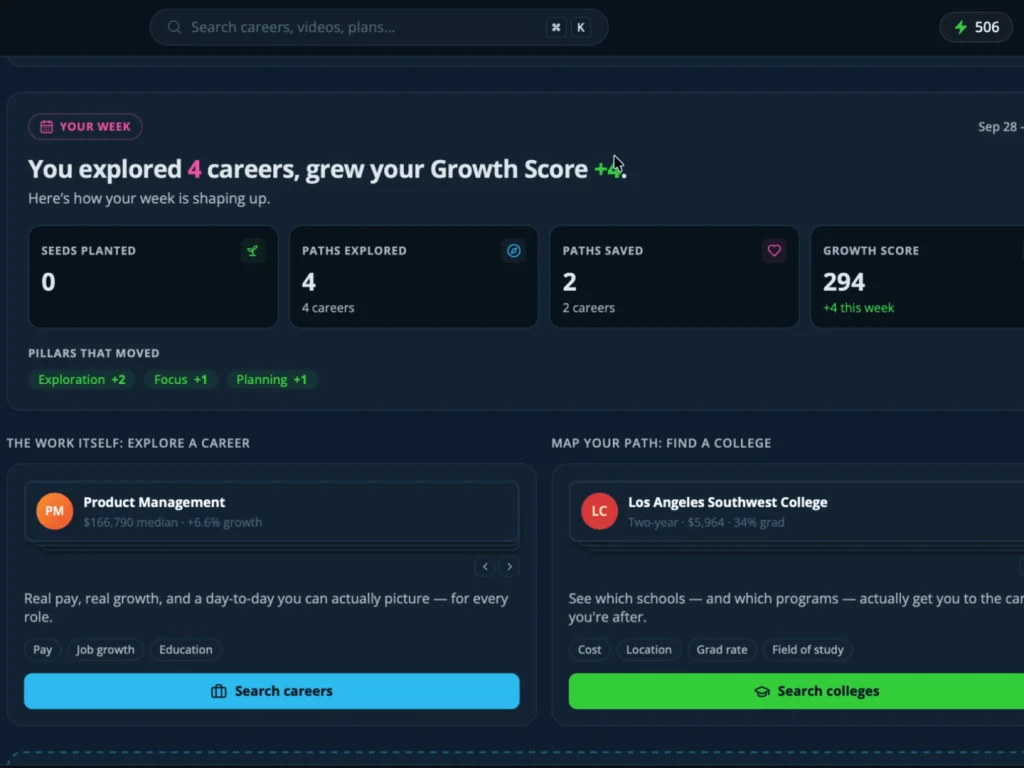
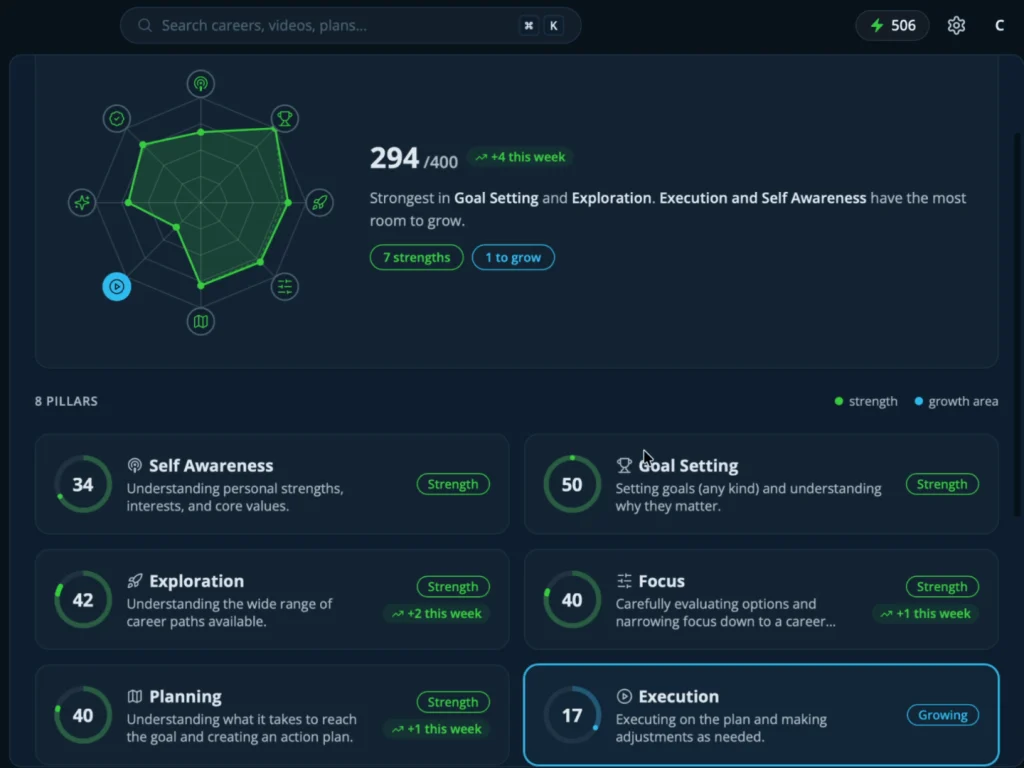
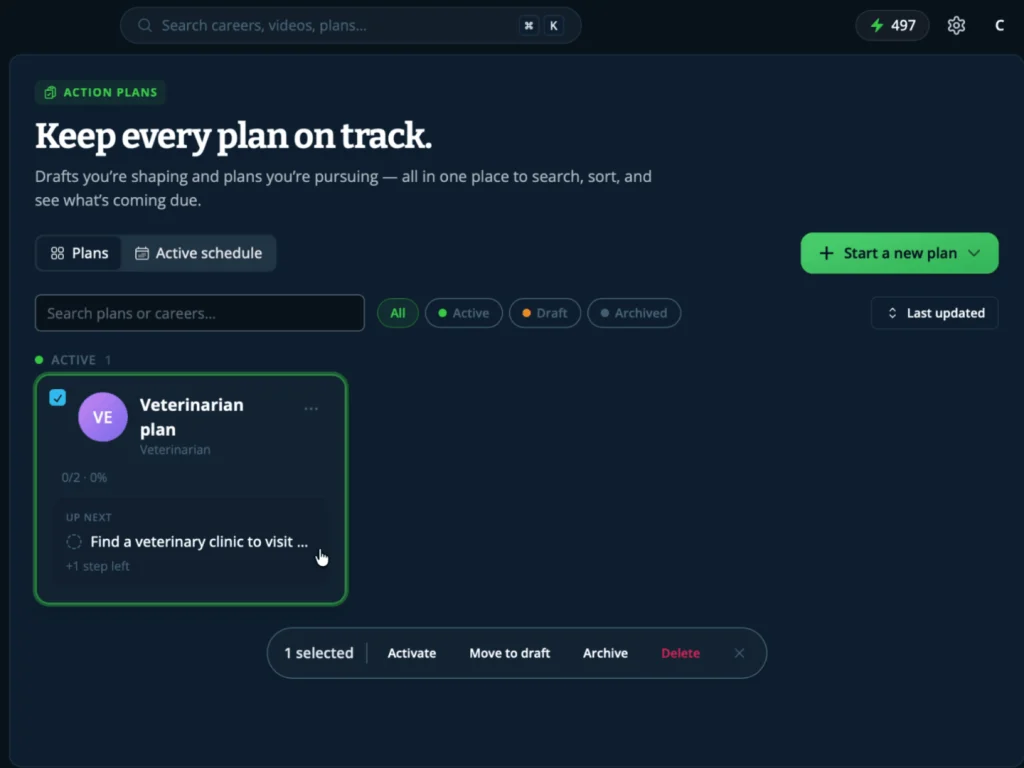
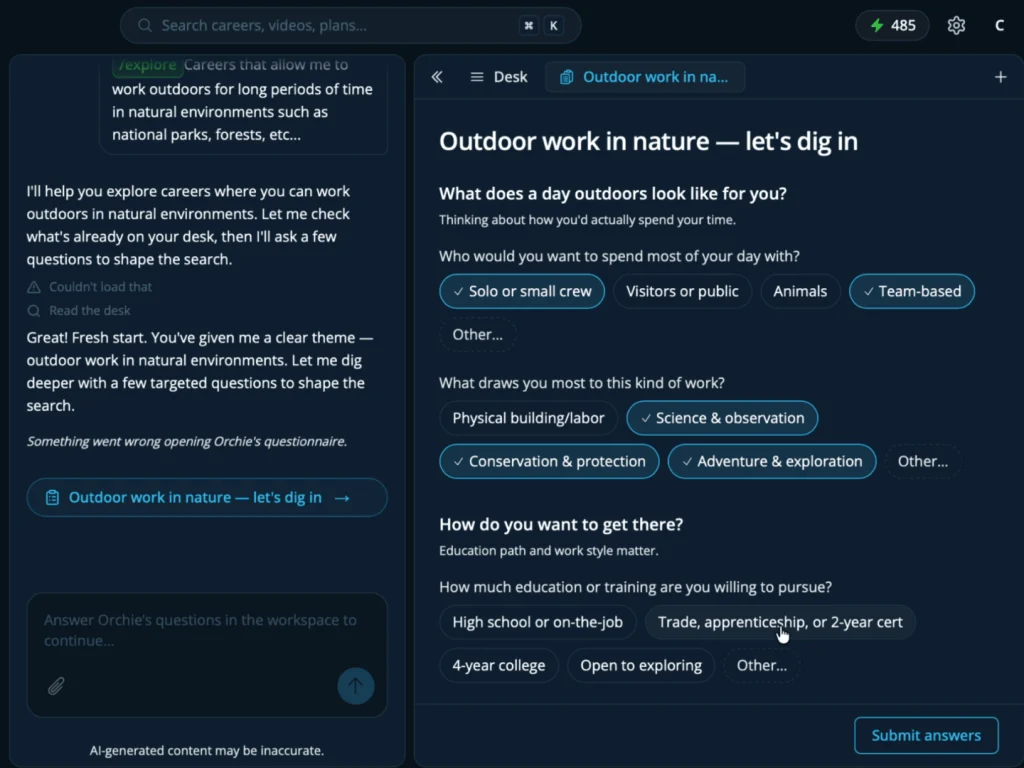
At its structural core, the platform operates as a purposeful, task specific AI layer that translates vague student inclinations into concrete actionable trajectories. Upon logging in, students are greeted by "The Desk", a centralized dashboard housing saved careers, customized action plans, growth and readiness metrics, recent explorations, saved institutions, and an omnipresent AI chat interface. The surrounding architecture is organized around three primary functional pillars: Explore, Plan, and Learn.
By pairing open ended natural language inquiry with guided diagnostic branching, Orchard avoids the trap of generic career matching. It creates an engaging, reflective sandbox where students can discover where their personal preferences intersect with real world workforce demand, educational requirements, and institutional choices, while allowing school teams to monitor and support that development over time.
Orchard is fundamentally not a core academic curriculum, and schools should not evaluate it as an instructional replacement for subject area coursework. Instead, its primary value lies as an institutional advisory and career readiness companion, designed to support high school students, college counselors, and career technical education (CTE) advisors in navigating postsecondary pathways.
The platform's direct instructional component lives within its expanding "Learn" tab, which leadership is executing in two distinct phases:
The tool's immediate utility within a school framework is serving as an exploratory workspace. It channels student curiosity into structured secondary trajectories, giving counselors a grounded starting point for high stakes advising sessions rather than starting from scratch.
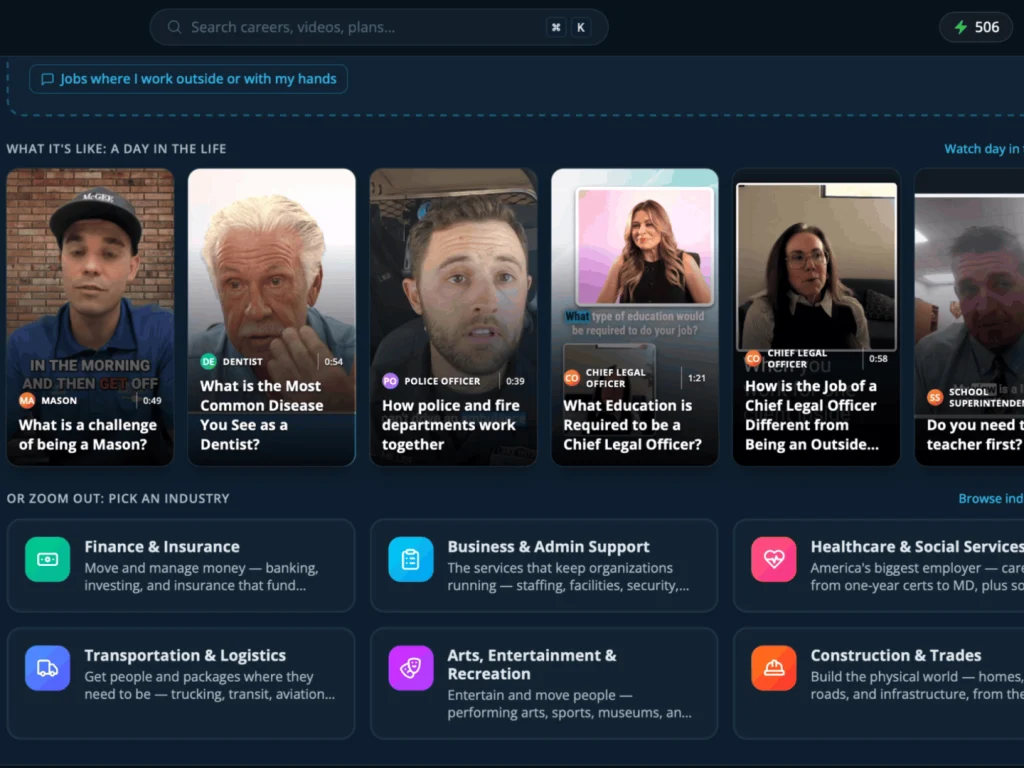
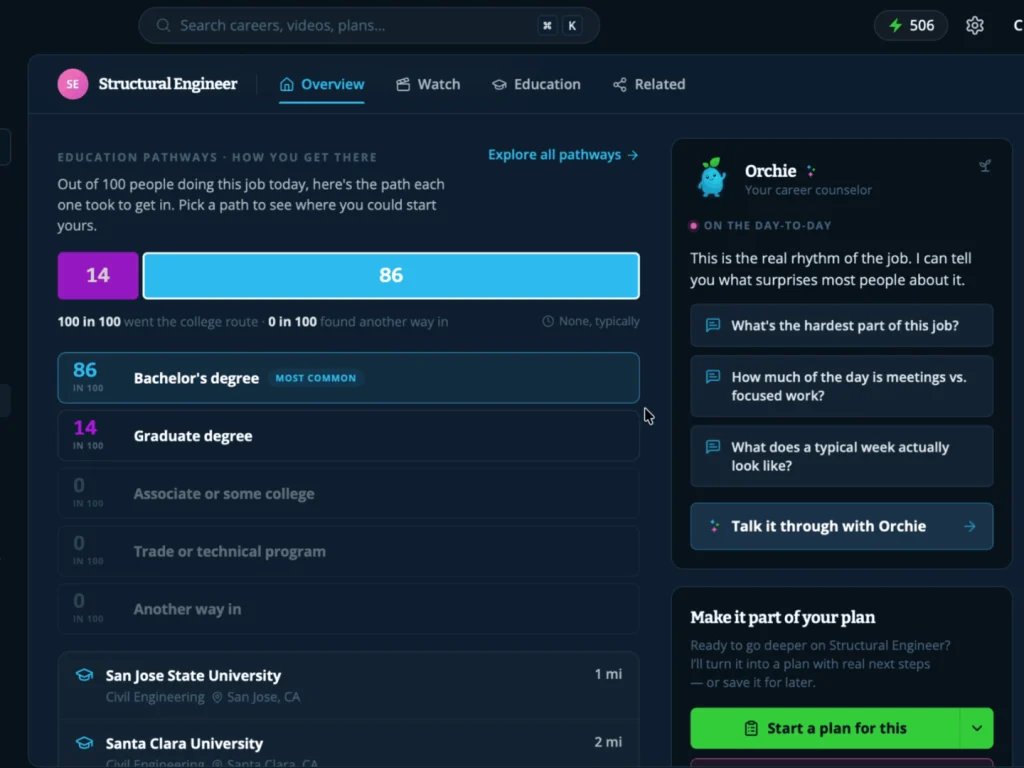
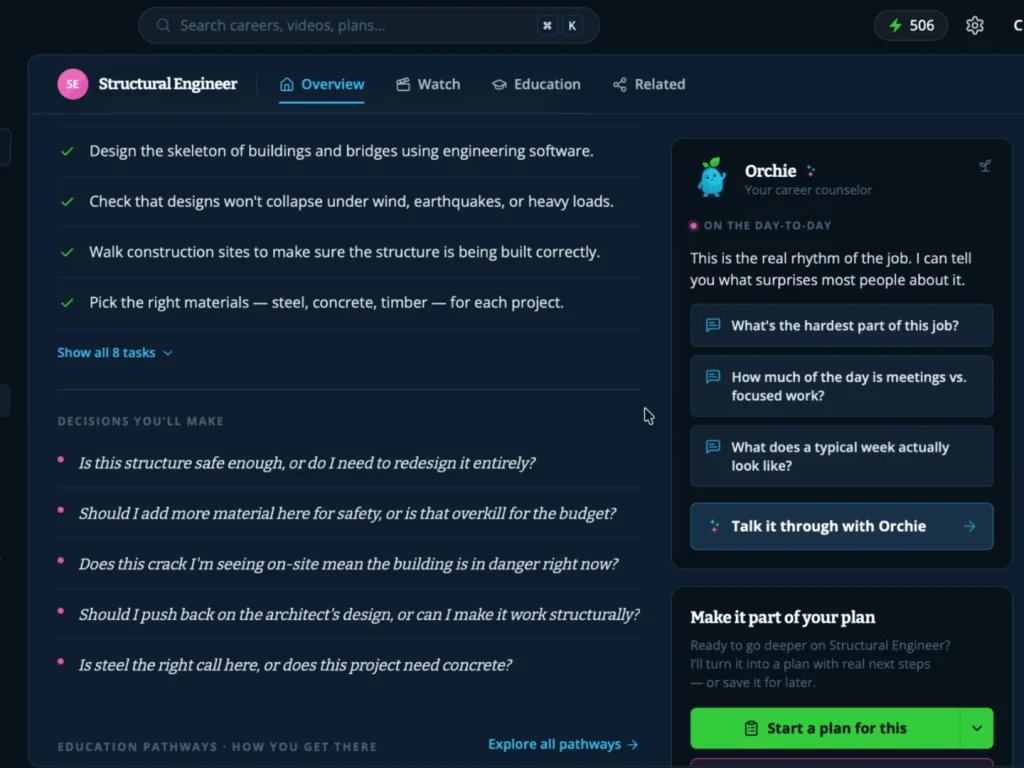
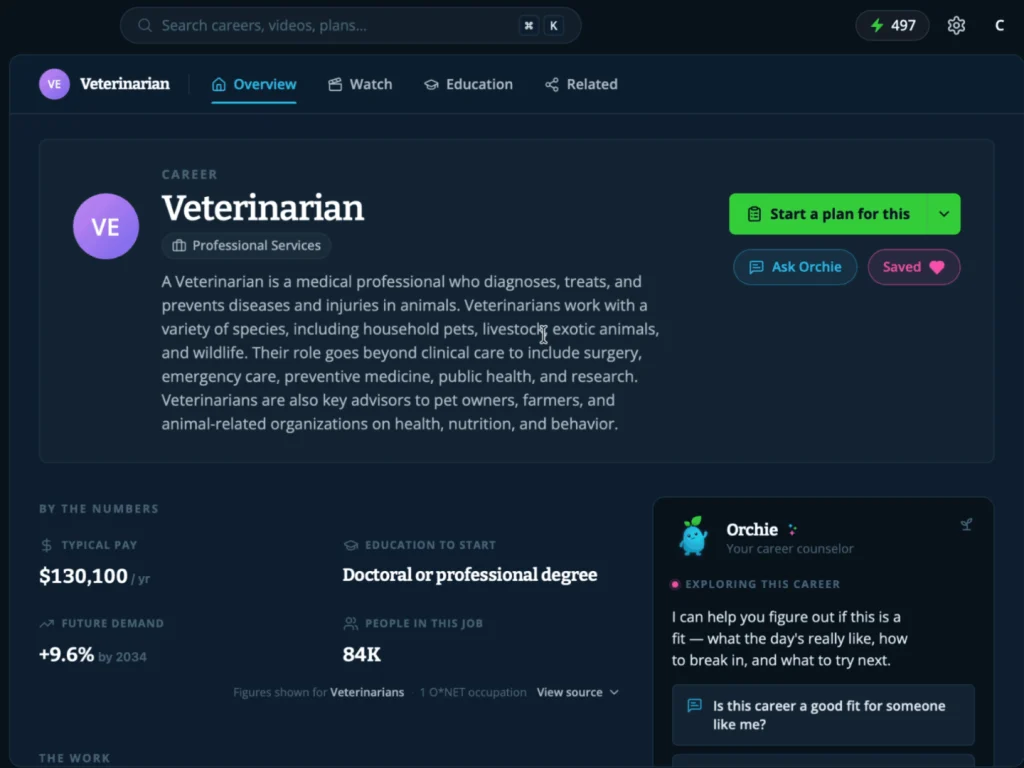
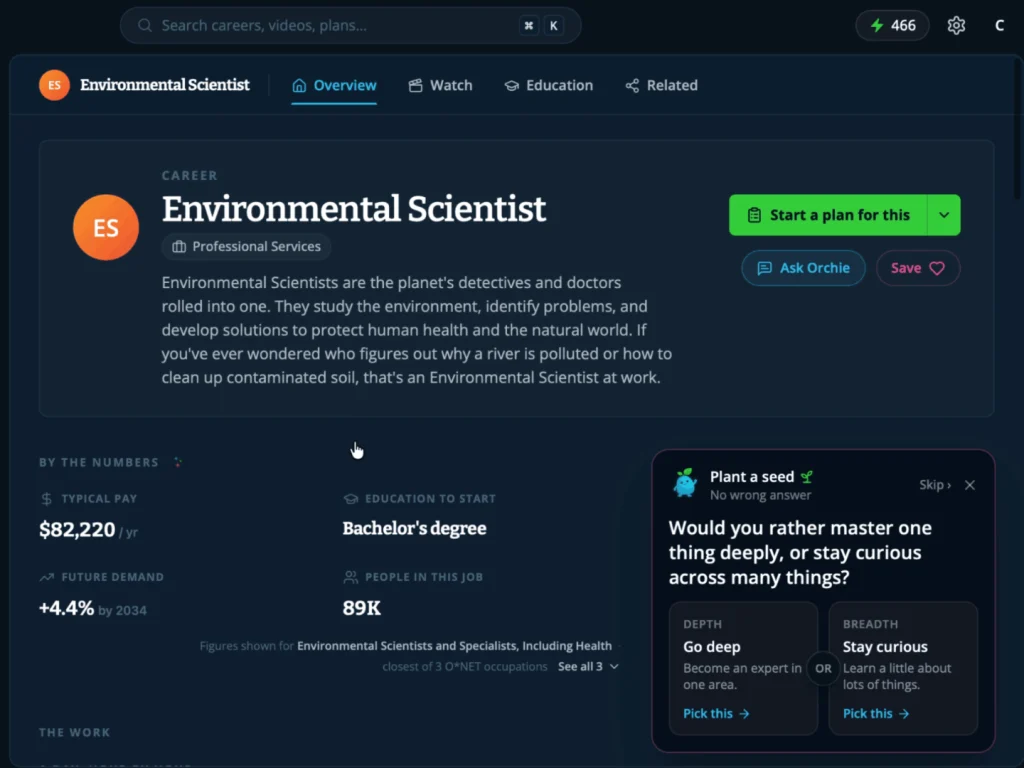
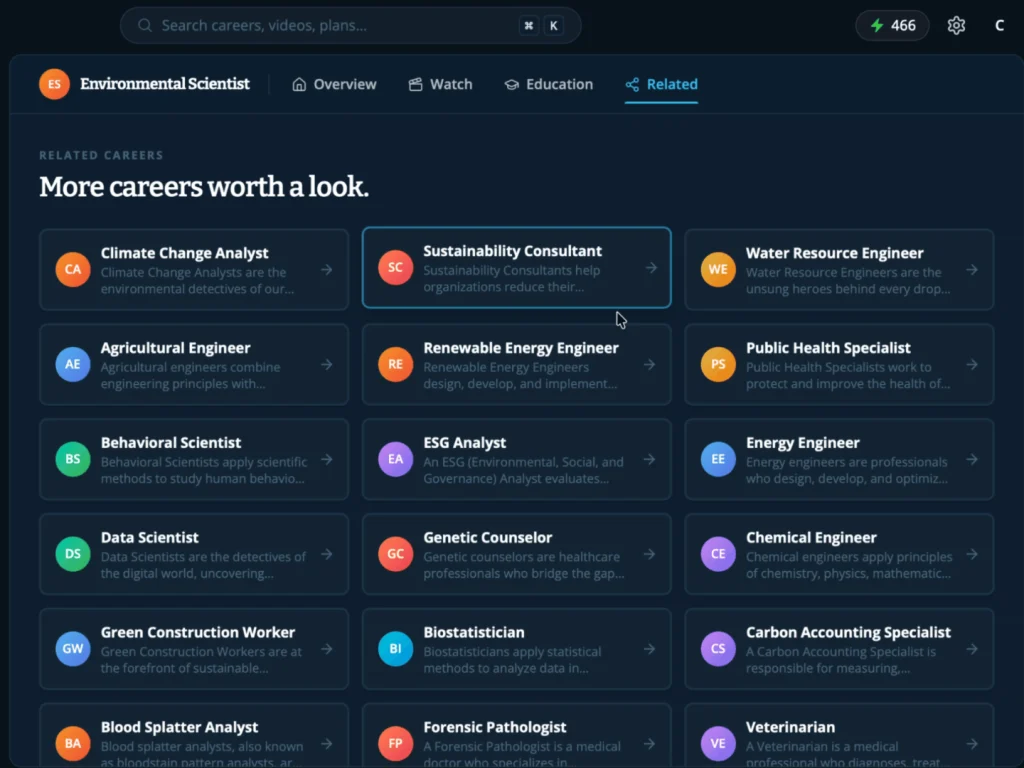
The user interface across Orchard is visually polished, modern, and engaging. It employs clean typography, rich graphical representations, and high production "Day in the Life" short form video reels that resonate with modern digital natives. The platform avoids sterile, text heavy data tables, opting instead for interactive cards, side by side career comparison modules, and dynamic branching questionnaires.
Navigation is anchored on the left sidebar through the Explore, Plan, and Learn hubs:
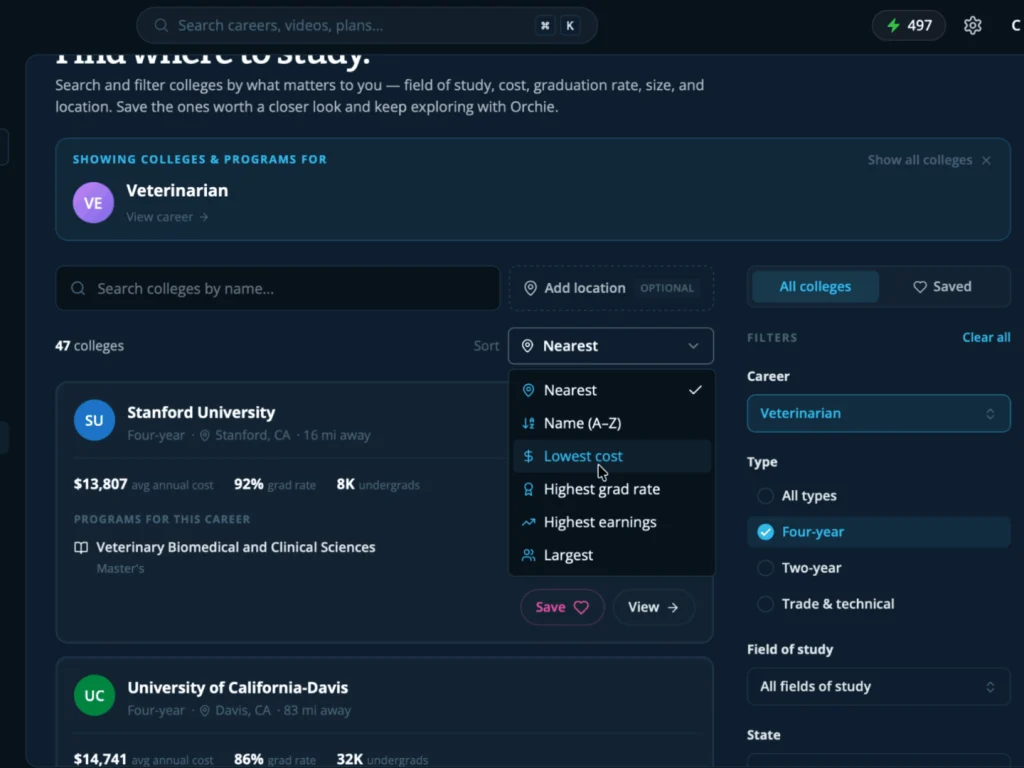
Despite its aesthetic appeal, the user experience experiences occasional moments of friction. Because features are deeply interconnected, the boundary between sections can become porous and confusing. A student might start an open ended career query, click through an educational link, and suddenly find themselves browsing individual colleges without realizing they have transitioned away from the initial exploration path.
Additionally, an on screen lightning bolt icon tracks active AI usage. Standard paid accounts receive an allocation of 500 AI credits per user each month, with paid add on tiers expanding this to 1,000 credits. Rather than placing a visible, decrementing counter directly in front of each student, which can easily trigger usage anxiety and stifle genuine exploration, a shared, schoolwide administrative quota would be a vastly superior model. Moving quota tracking to the background and alerting administrators if the campus approaches an aggregate credit limit would preserve an uninhibited brainstorming environment for kids while still giving schools control over their bottom line.
Orchard operates as a cloud based web application optimized for modern desktop, laptop, and Chromebook browsers. To facilitate deployment across school networks, the platform supports single sign on (SSO) and roster provisioning via Clever, ClassLink, and Google for Education.
Direct integrations with Student Information Systems (SIS) like PowerSchool do not currently exist, though leadership is exploring connections that could extract local course catalogs to recommend specific on campus classes and regional community programs aligned with a student's chosen career path.
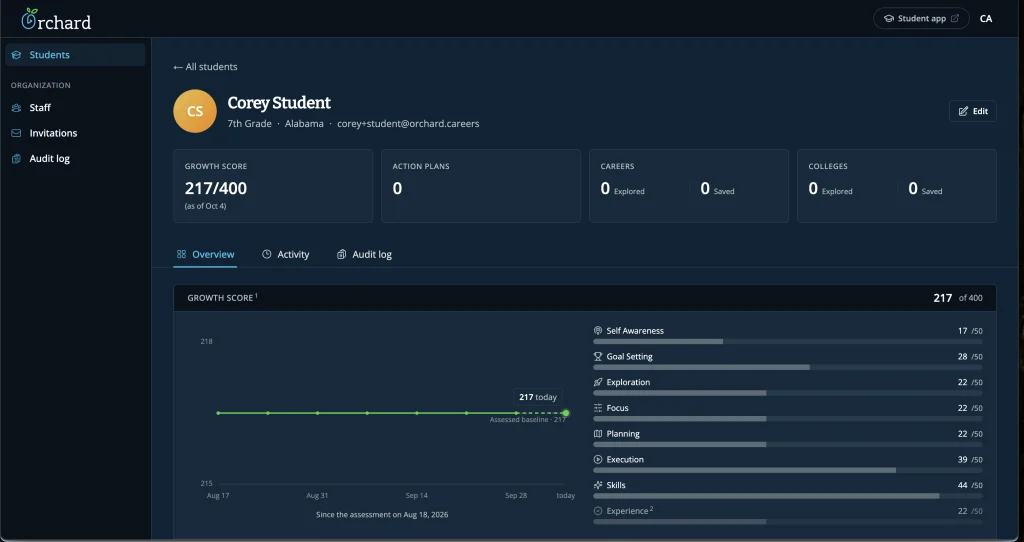
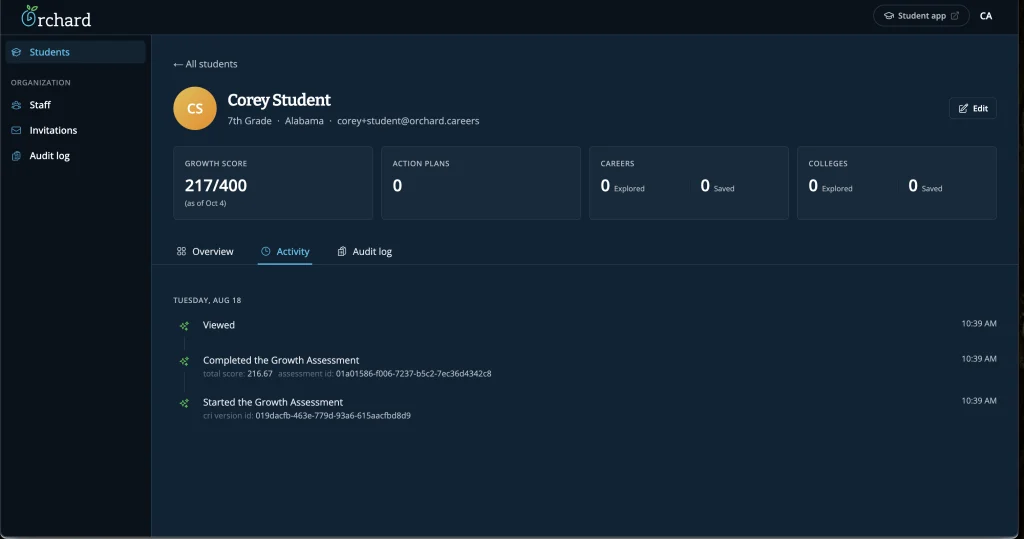
On the administrative side, the counselor interface provides essential baseline controls: inviting staff and students, monitoring student exploration progress, and tracking changes across student cohorts over time. The company is actively collaborating with school partner feedback to expand this administrative layer into more sophisticated diagnostic dashboards.
Orchard offers flexible institutional licensing structured around campus enrollment, cohort size, and AI credit volume:
Given typical counselor to student ratios across secondary education, this represents an accessible financial investment. The return on investment is realized primarily through administrative leverage: providing an autonomous, 24/7 preparatory layer that helps students articulate their goals before sitting down for limited face to face advising time.
Professional development and structured implementation training are strongly recommended for any school adopting Orchard. While students can easily navigate the front end chat interface on their own, the platform’s underlying value depends entirely on the quality of student input. If students approach the software casually or enter superficial answers, the resulting guidance will be equally generic, leading to a classic "garbage in, garbage out" outcome.
Effective professional development should focus on helping counselors and advisory teachers guide students into deeper, more reflective engagement. Furthermore, Orchard would benefit significantly from introducing a structured, 20 to 30 minute diagnostic baseline assessment during onboarding. Having students complete an intentional personal preference inventory upon their first login would establish a rich baseline profile, ensuring the AI recommendation engine delivers targeted, high value career pathways from session one.
Operating primarily in the secondary space for ages 13 and up, Orchard sits outside the strict constraints of COPPA, while maintaining standard FERPA alignment across its school deployments. The platform does not sell student personal data or run third party advertising.
To protect student privacy and minimize compliance hurdles, Orchard currently stays away from collecting sensitive records:
While this nonsensitive data footprint keeps implementation clean and risk free for district IT administrators, it presents an eventual product design tension. To deliver deep, actionable financial guidance through features like the "Money Plan", the platform will eventually need to explore secure parent facing portals or opt in household contribution estimates without compromising student privacy.
Orchard represents an exciting, practical evolution in secondary career and college guidance technology. At a time when high school counseling suites are managing unprecedented caseloads, the platform provides a genuine force multiplier that elevates student agency. By pairing conversational AI with practical workforce data and structured action plans, Orchard empowers students to explore postsecondary options with intentionality and purpose.
The company's phased roadmap, which focuses immediate curriculum expansion on durable life skills before tackling broader occupational CTE training, aligns directly with real world school needs. While the counselor administrative portal is still maturing and deep financial modeling remains on the horizon, Orchard's pricing model, SSO ecosystem compatibility, and intuitive discovery engine make it a standout asset.
Orchard receives an enthusiastic recommendation and an overall grade of A–. It is worth emphasizing that the minus attached to this mark is in no way a criticism of what the platform currently delivers; rather, it reflects an eager anticipation for the high impact tools currently on the roadmap. Once the dedicated "Money Plan" is live and the "Learn" catalog is populated with durable skills, this platform will easily secure an unqualified, top tier rating. It remains a modern, sophisticated platform for secondary schools, counseling departments, and forward thinking educators seeking to guide students toward purposeful, well planned futures.