
Math Academy is an advanced, AI driven mathematics instructional platform engineered by former secondary educators of advanced mathematics from Southern California. Unlike traditional educational software that begins with early elementary arithmetic and struggles to scale upward, Math Academy was built from the top down. The creators originally engineered the platform to address the acute instructional gaps in advanced, higher level secondary mathematics, including calculus, linear algebra, and trigonometry, before systematically expanding the architecture both upward into higher education and downward into foundational grades.
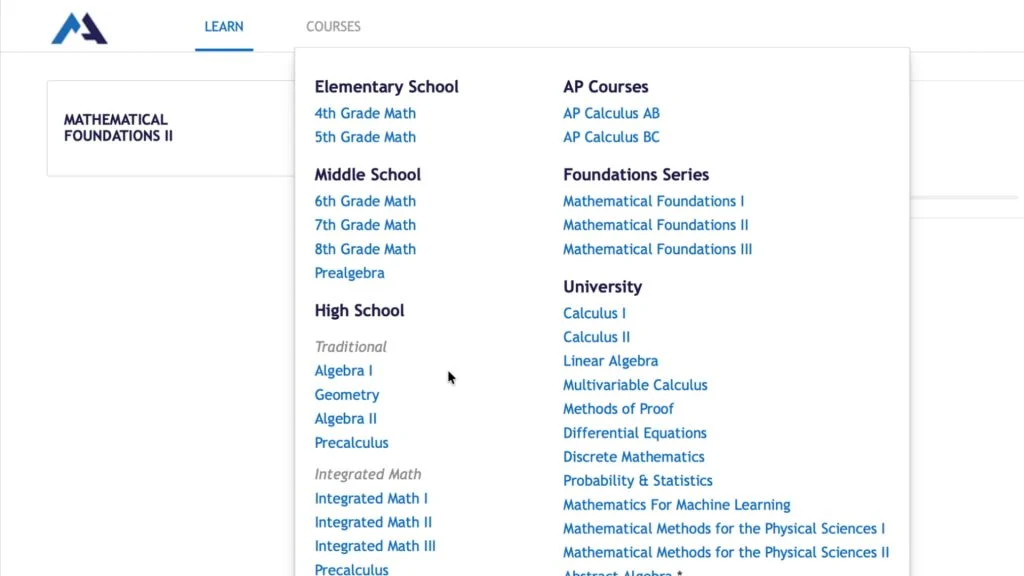
Today, the platform spans an extraordinary catalog starting at the fourth grade level and extending through university grade coursework, including abstract algebra, multivariable calculus, probability and statistics, and differential equations. Between these two poles sits a full sequence of secondary coursework: foundational fourth through eighth grade math, prealgebra, algebra I, geometry, algebra II, integrated math sequences (including honors tracks), and dedicated SAT and ACT math test preparation modules.
The initial omission of early elementary content reflected intentional instructional design, as Math Academy relies heavily on self directed textual analysis, conceptual reading, and autonomous problem solving. However, the platform is actively expanding downward with an upcoming third grade math course alongside a dedicated text to speech engine specifically designed to assist younger or struggling readers. For upper elementary, middle school, secondary, and postsecondary students, it provides an exceptionally deep, rigorous environment that emphasizes pure mathematical competence over superficial gamification.
Math Academy takes a fundamentally different pedagogical approach from legacy platforms like IXL. Where traditional tools operate primarily as digital worksheets intended to assess concepts after a classroom teacher has introduced them, Math Academy is engineered to take ownership of the core instructional delivery itself.
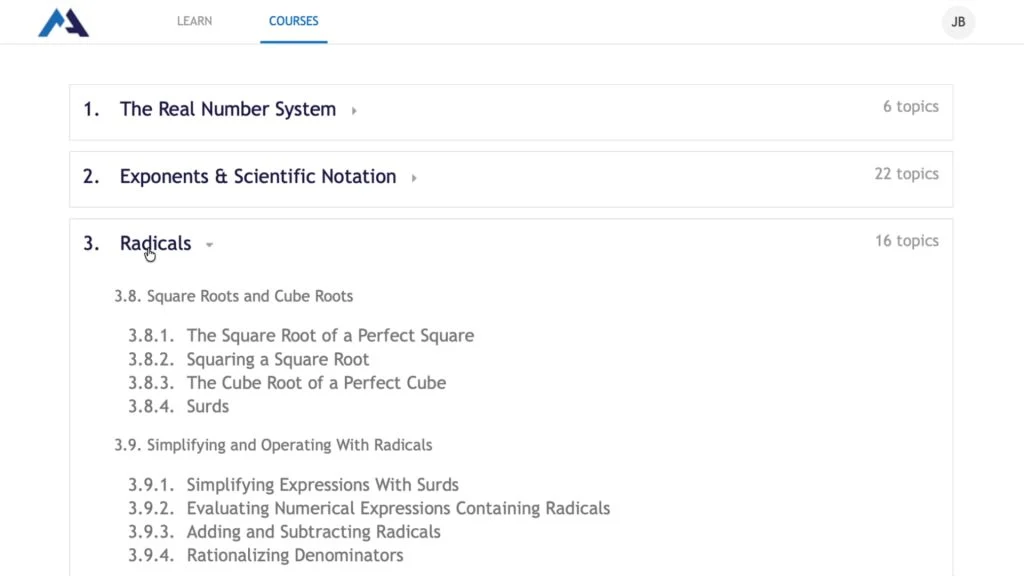
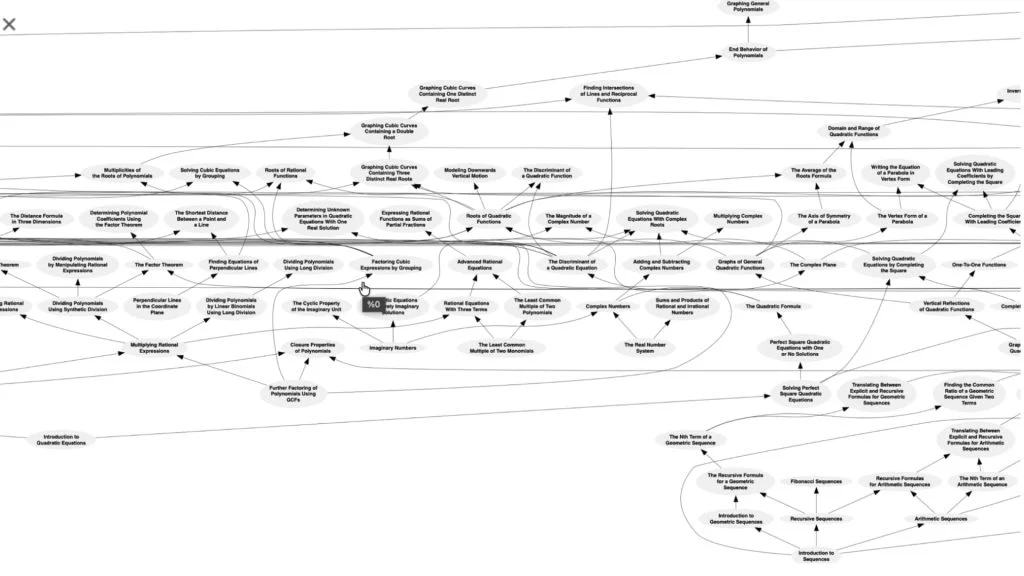
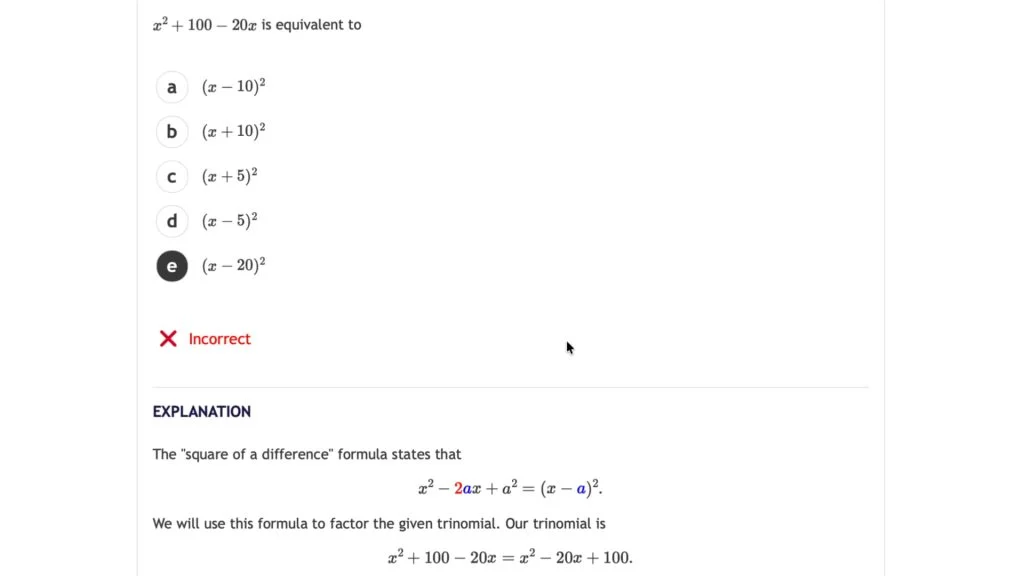
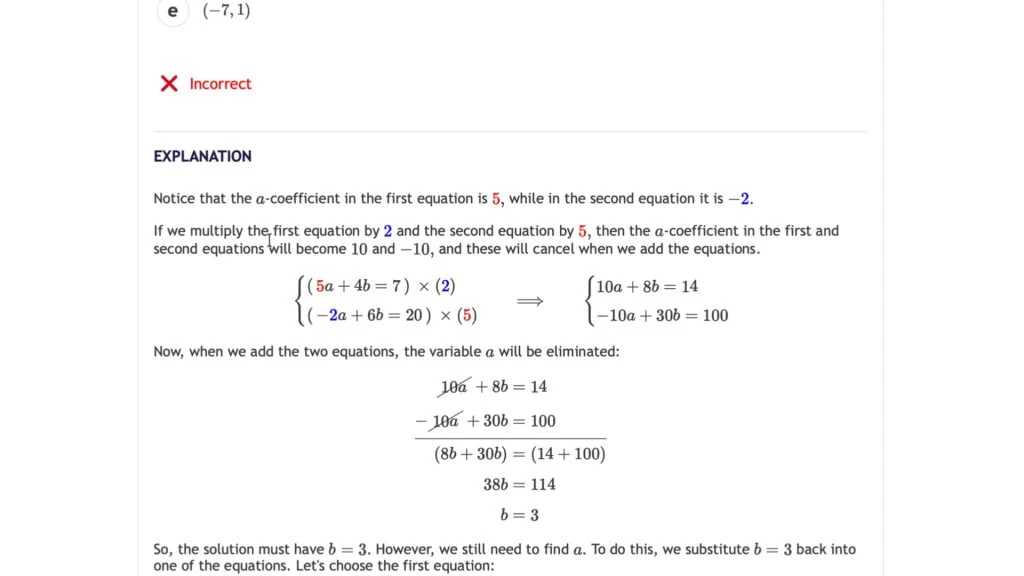
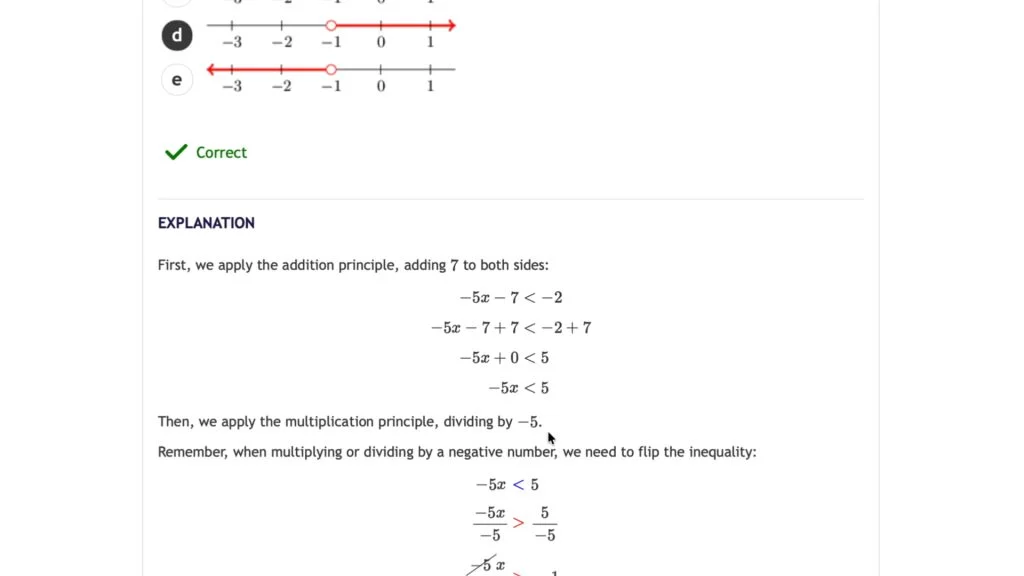
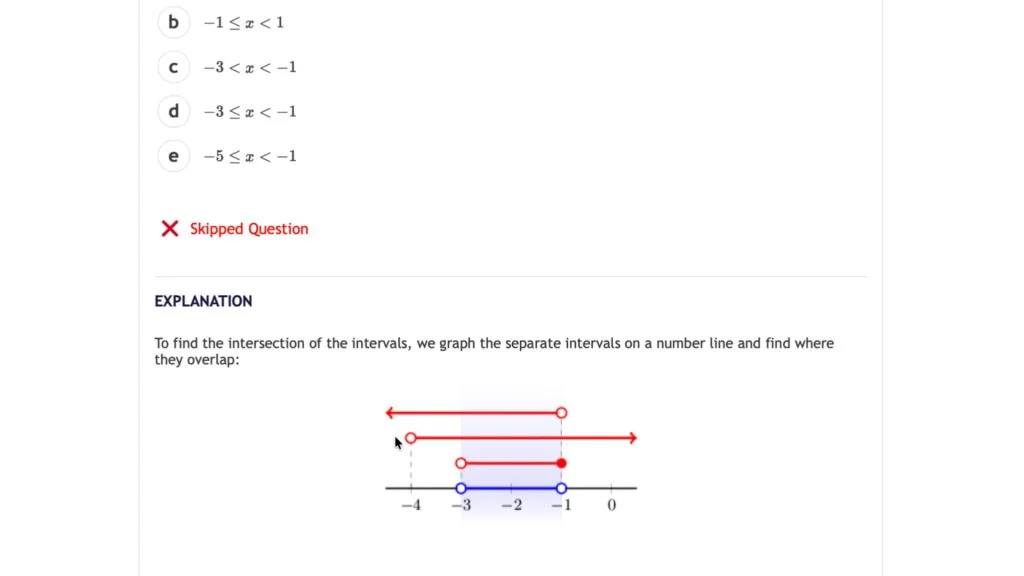
The curriculum functions as an interconnected, mastery driven knowledge graph rather than a set of supplementary practice drills. When a student encounters a problem they do not understand, or flags their own confusion, the software does not simply display an answer key. Instead, it provides exhaustive, step by step diagnostic text and worked examples that unpack the underlying logic, derivations, and calculations. Within each course, the platform documents the specific mathematical competencies being addressed, allowing educators to inspect granular conceptual dependencies and problem sets.
The platform is also directly targeting the root causes of secondary mathematical failure through several high impact roadmap additions. Chief among these is a dedicated math facts and automaticity training module built on cognitive research. As the founders note, a student who lacks instantaneous recall of basic single digit multiplication will inevitably hit a wall when attempting to factor quadratics in prealgebra, effectively ending their mathematical progression before it begins. By coupling automaticity drills with advanced curriculum, and preparing support for simultaneous multi course enrollment (such as concurrent enrollment in algebra II and SAT prep), Math Academy provides an unbroken continuum of rigor.
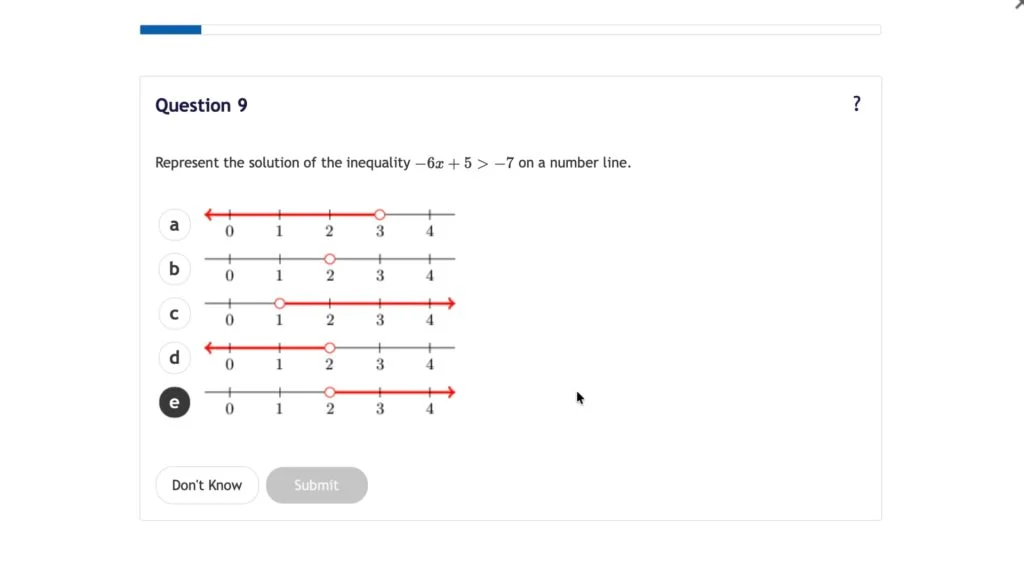
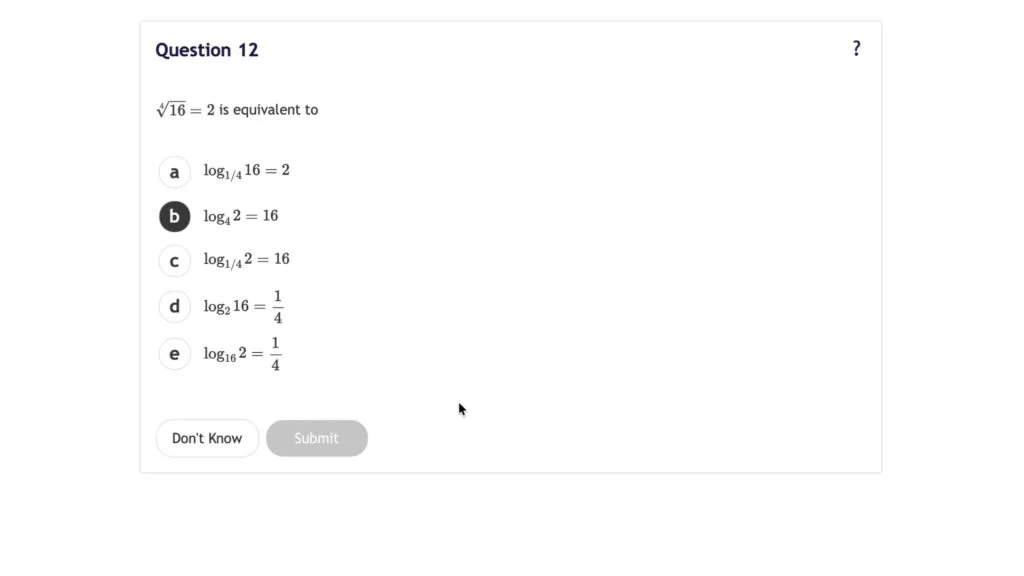
The user experience of Math Academy is Spartan, utilitarian, and uncompromisingly academic. It completely rejects modern edtech design tropes: there are no cartoon mascots, dopamine driven reward chimes, flashy celebratory animations, or hyperactive gamified loops. The interface prioritizes clear mathematical typesetting and functional clarity over visual styling. While detractors might describe the aesthetic as plain, the platform’s deliberate lack of visual clutter keeps student focus squarely on the mathematics.
Student onboarding begins with an exhaustive, adaptive diagnostic assessment that can take upwards of an hour to complete. Rather than rushing students through a superficial screener to display immediate engagement metrics, the diagnostic probes deeply to map true conceptual boundaries.
During instructional sequences, the underlying algorithm handles errors and pacing with notable sophistication:
To protect the integrity of independent student work, the team is also deploying an integrated "outside input" detection engine designed to identify when external math solvers or browser based LLMs are undercutting a student's learning experience, alerting teachers and parents while keeping the focus on authentic conceptual mastery.
Math Academy is a cloud based web application that operates seamlessly across modern browsers on desktop computers, laptops, and Chromebooks. While it relies on an extraordinarily complex AI engine on the backend, that technology operates invisibly. There are no conversational voice bots or distracting synthetic teacher avatars; the AI functions strictly as an algorithmic content curation and knowledge graph engine that dynamically determines problem sequencing based on precise diagnostic history.
On the administrative and rostering side, the platform is actively expanding its footprint across district infrastructure. Basic CSV importing is currently supported, and direct integrations with Clever, ClassLink, and Google Classroom are coming soon.
Furthermore, full LTI integration with major Learning Management Systems like Canvas and Schoology is in the works, which will pave the way for automated gradebook synchronization and unified institutional reporting. In addition, upcoming platform tools will introduce customizable scheduling controls for proctored exams, giving educators greater institutional authority over formal testing checkpoints within their academic calendars.
Math Academy operates on an institutional tier scaled subscription model. Given that the tool acts as a primary instructional engine rather than a passive question bank, its cost structure reflects its comprehensive scope.
Institutional deployments and grant funded implementations generally scale based on overall student volume:
For an average classroom cohort of roughly 20 students, an annual academic deployment spanning a standard 10 month instructional calendar represents an investment of approximately $7,000. While this price point is higher than that of generic supplemental software, the expenditure represents significant value when evaluated as an autonomous, fully differentiated instructional delivery system capable of supporting advanced coursework that a single teacher cannot realistically differentiate alone.
Implementing Math Academy requires a philosophical shift rather than technical button clicking training. Because the platform’s UI is straightforward, professional development should focus primarily on pedagogical transition and classroom role redefinition.
Traditional direct instruction teachers may experience professional friction when adopting the software, as the platform assumes responsibility for introducing primary concepts. Professional development must guide educators on how to reorganize their instructional blocks effectively:
Schools that attempt to layer Math Academy on top of a rigid, full period traditional lecture model will create redundant instructional friction. Long term success requires administrative commitment to letting the engine carry the heavy lifting of direct instructional delivery.
Math Academy adheres to established student privacy statutes, maintaining strict compliance with federal FERPA and COPPA standards. Because the software does not incorporate third party advertising, open social media feeds, or public forums, student data remains secure and isolated within the educational silo.
The data gathered by the platform consists almost exclusively of detailed telemetry regarding student performance: response latency, specific error patterns, procedural accuracy, and longitudinal retention curves. Crucially, the platform uses this data solely to calibrate its internal learning engine and populate instructor dashboards, avoiding the ethical pitfalls of commercial behavioral profiling or third party AI model training.
Math Academy is one of the most powerful, intellectually serious mathematical learning platforms currently available. Built by educators who understand the cognitive demands of advanced mathematics, it completely bypasses the superficial gamification that plagues contemporary educational software, choosing instead to prioritize deep conceptual mastery, disciplined practice, and intelligent algorithmic differentiation.
The software challenges the traditional paradigm of the classroom, demanding that educators embrace a model where software handles the heavy lifting of individualized direct instruction, freeing teachers to act as targeted, high impact mentors. For schools, micro schools, and districts prepared to make that transition, the instructional return on investment is extraordinary, particularly for accelerated students and those in need of foundational remediation.
Math Academy receives an enthusiastic recommendation and an overall grade of A. While its visual presentation is modest and its administrative dashboards, rostering tools, and LTI sync capabilities are still maturing, the core pedagogical engine, the remarkable course breadth, and the ambitious product roadmap make it a standout instructional asset for any secondary school or advanced mathematics program serious about academic achievement.