Overview
Synthesis Tutor is primarily an elementary focused math learning platform built by Synthesis, which originally gained attention during the COVID era for its cohort based product called Synthesis Teams. That original experience emphasized collaborative problem solving, game based challenges, and group instruction in math and programming, and it was widely praised for keeping students engaged during remote learning.
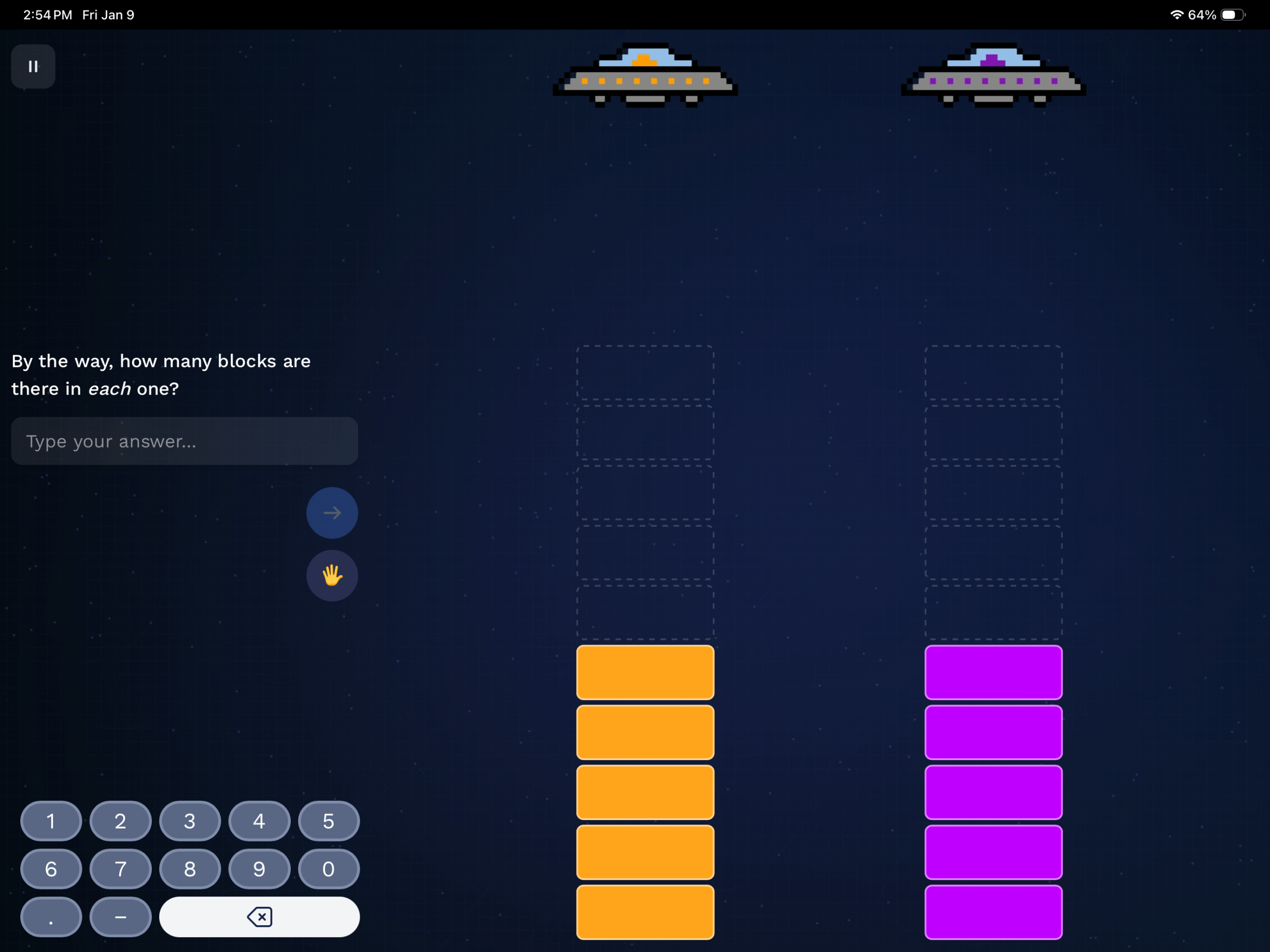
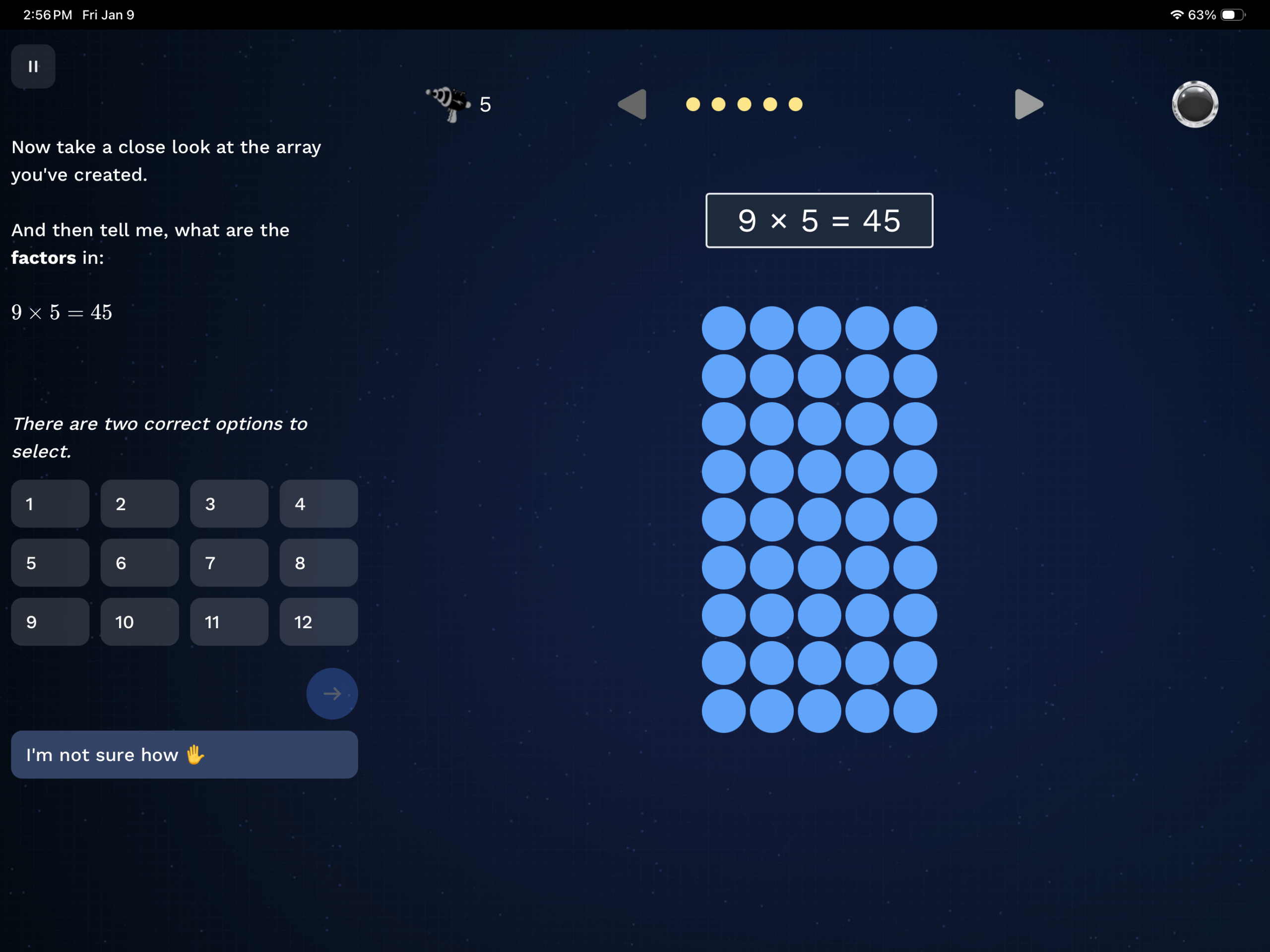
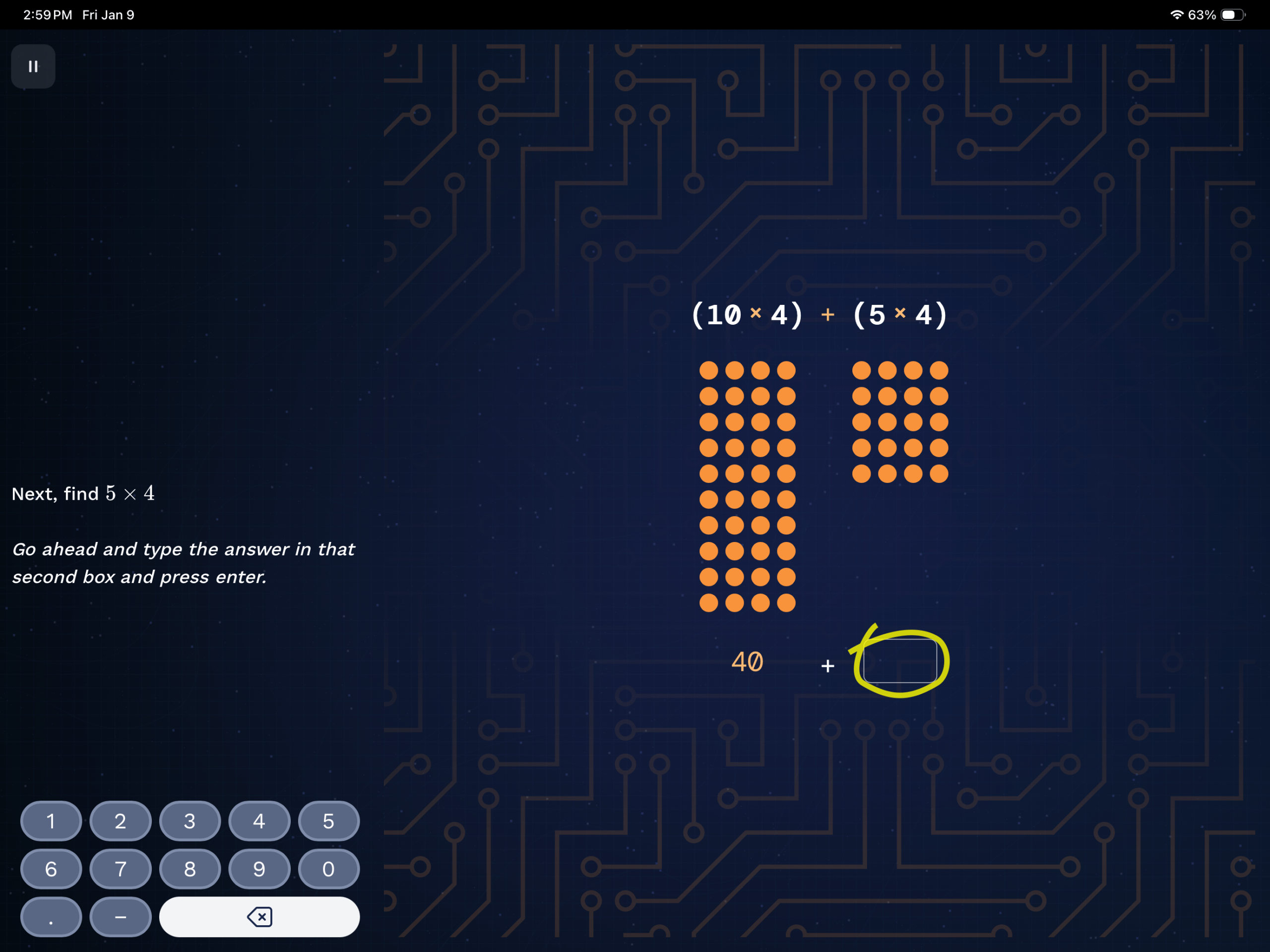
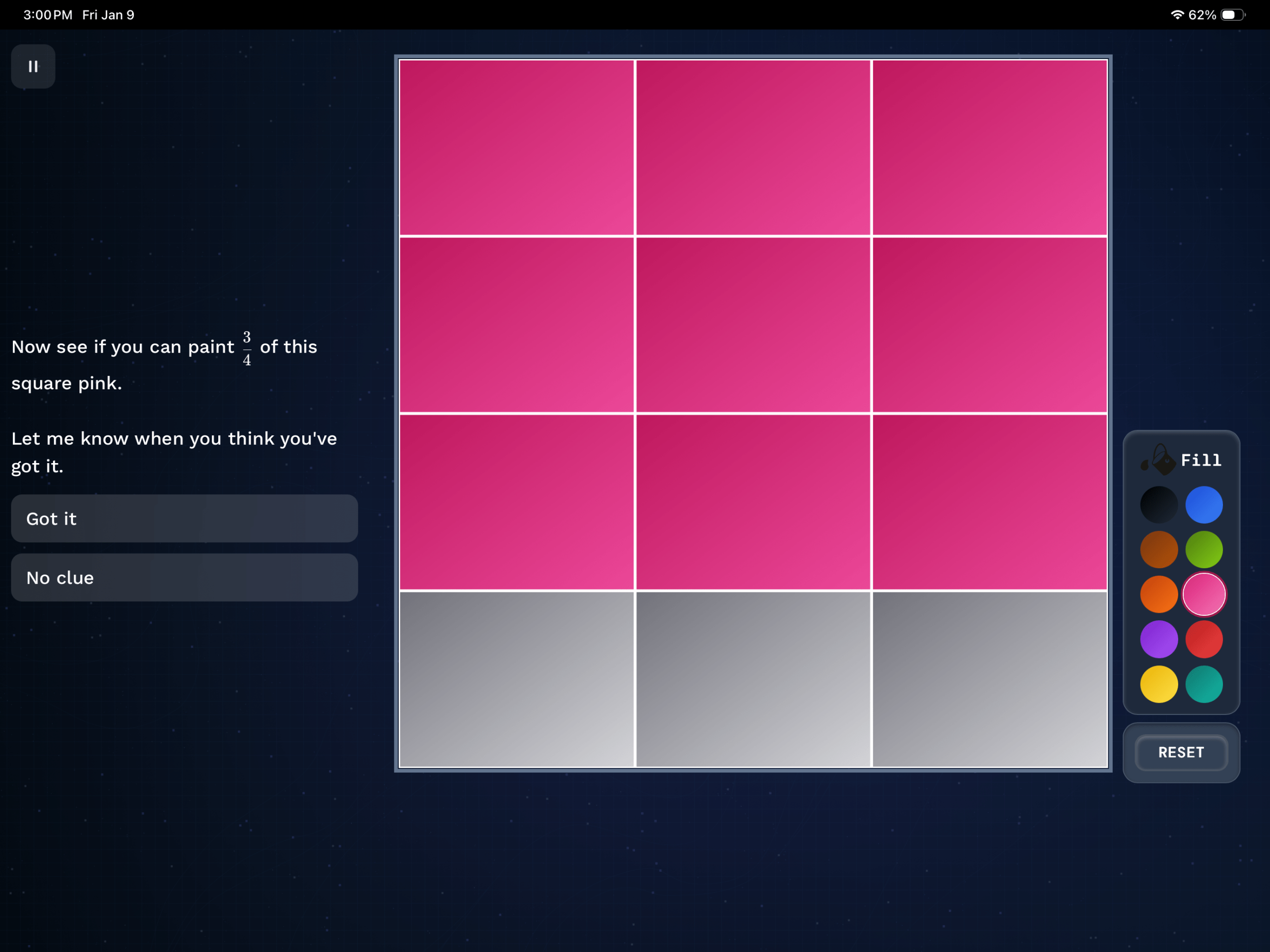
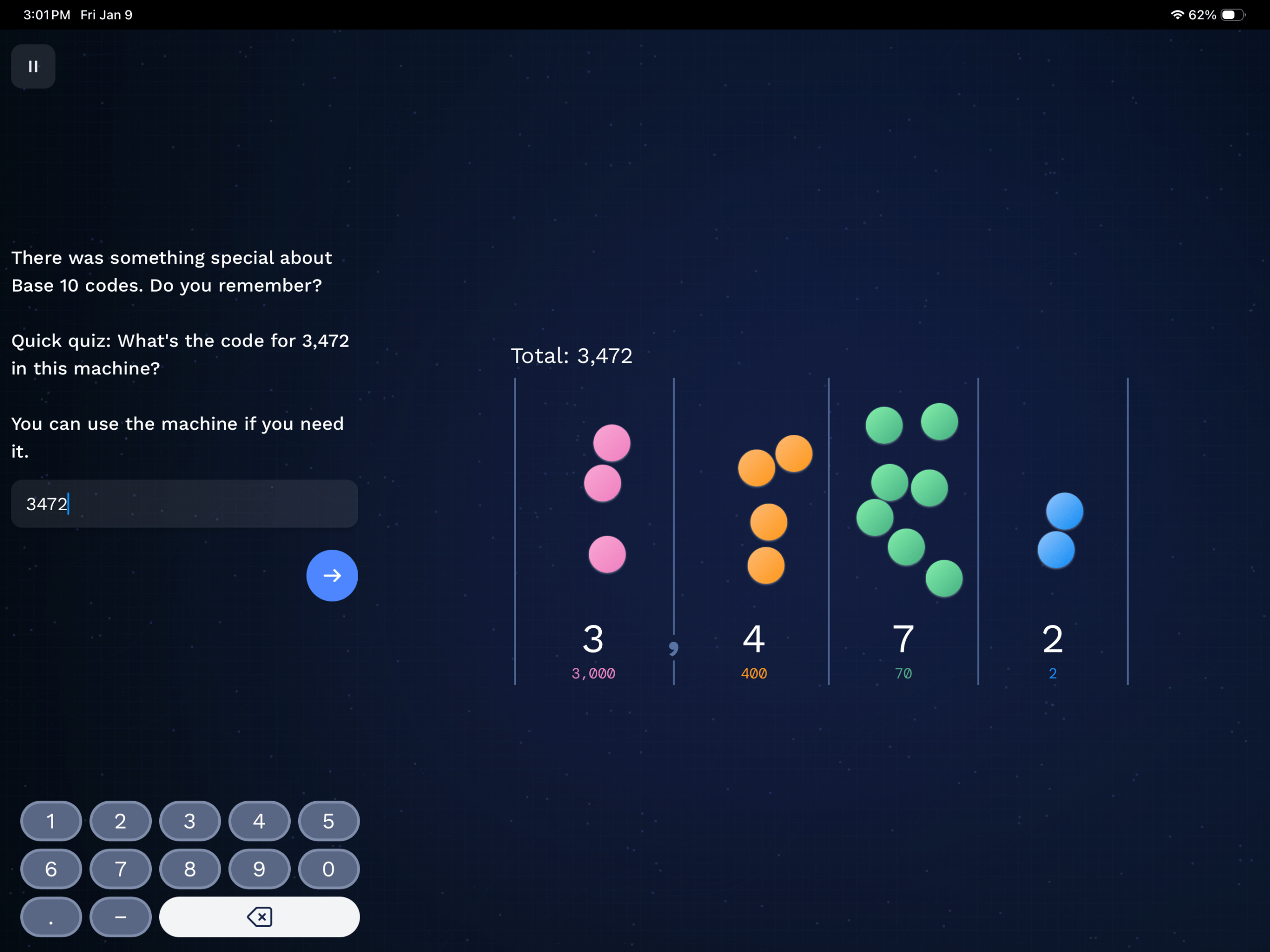
Synthesis Tutor represents a shift away from live group instruction toward individualized, voice guided learning powered by adaptive algorithms and AI assisted sequencing. It delivers math lessons that emphasize visual models and interactive representations rather than drill based practice. The platform supports a wide range of elementary math concepts and is designed to make learning feel engaging, supportive, and conceptually grounded.
The platform is best suited for students from kindergarten through around sixth grade, depending on background and learning needs. Advanced sixth grade students may find much of the content below their level, while fifth and sixth graders who benefit from reinforcement or conceptual rebuilding are likely to find the experience affirming and engaging.
Curricular Integration
Synthesis Tutor focuses entirely on mathematics, covering foundational topics from early number sense through upper elementary concepts such as place value, fractions, and operations. Rather than attempting tight textbook alignment or comprehensive standards mapping, the platform prioritizes conceptual understanding through visual explanation and interactive modeling.
Compared to platforms like IXL, Synthesis Tutor offers a noticeably stronger lesson delivery experience. While IXL provides significantly broader coverage and excels at large scale assessment and practice, Synthesis Tutor’s lessons feel more intentional and instructional. The emphasis is on teaching ideas clearly and creatively rather than primarily evaluating whether a student already knows them.
Synthesis Tutor is not intended to replace a core math curriculum or textbook. Instead, it works best as a differentiated support tool for enrichment, accelerated pacing, center based learning, or independent exploration alongside classroom instruction.
User Experience
Students interact with Synthesis Tutor through a voice guided interface that feels supportive and conversational. Lessons incorporate custom visuals and interactive elements that vary by topic, helping students engage with math in ways that feel concrete and intuitive. Younger learners receive more audio scaffolding, while older students are encouraged to move more independently through content.
Feedback is consistently positive and gentle. When students struggle, the platform reframes ideas and presents alternative explanations rather than simply marking answers incorrect. This layered instructional approach helps reinforce understanding and reduces frustration.
Earlier versions of the platform occasionally felt laggy or slow to respond. Those issues may have been related to device performance or connectivity, but recent releases appear smoother, more responsive, and more polished overall. Ongoing UI updates have also made lesson progression and content structure easier to follow.
Matching student learning needs to content can sometimes feel imperfect, particularly early on, but adaptive sequencing appears to improve as students spend more time on the platform.
Technology and Systems Integration
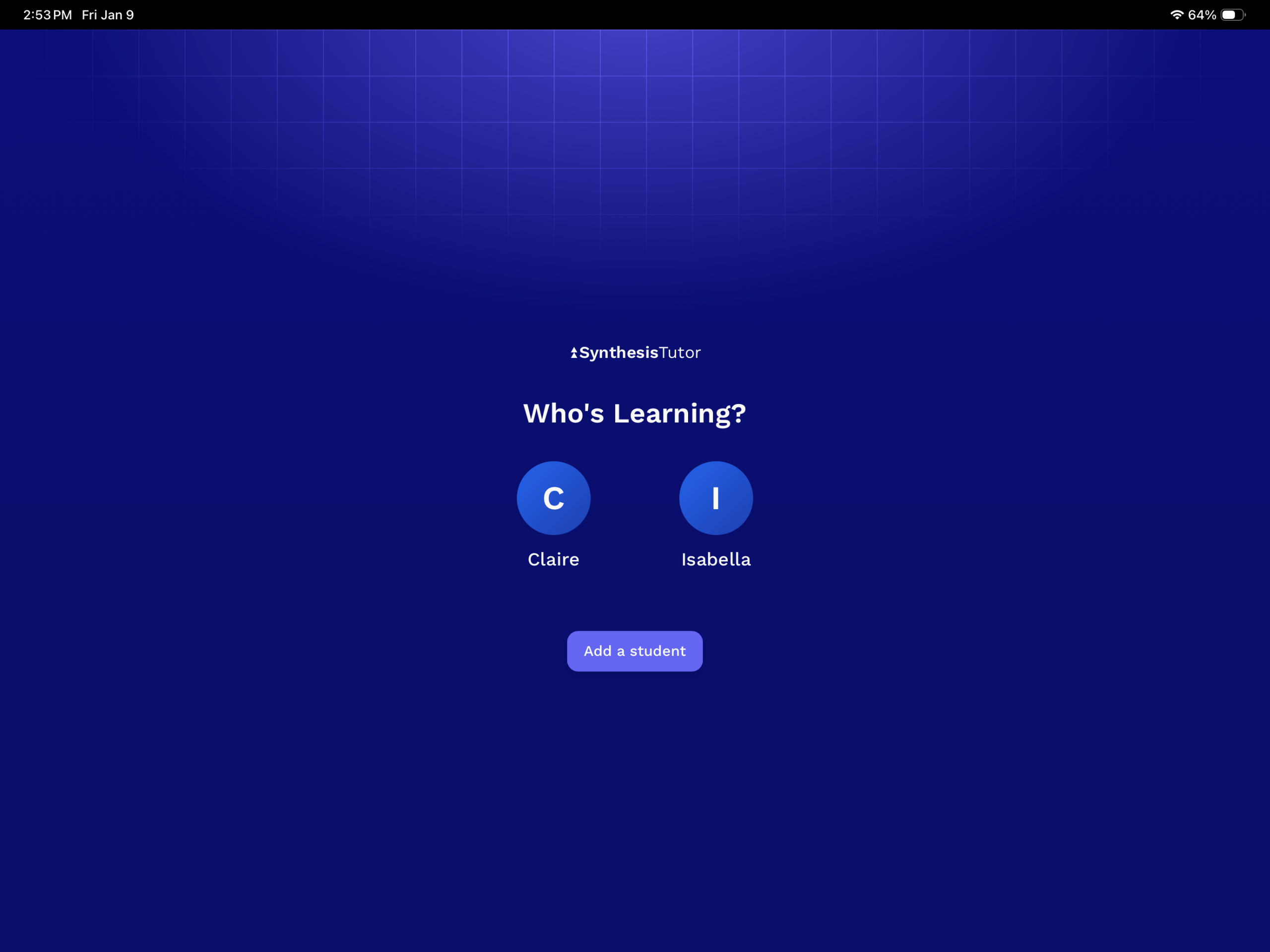
Synthesis Tutor is easy to set up for families, with a single subscription supporting multiple student profiles. Students log in, select their profile, and begin working through lessons tailored to their pace and interaction history.
While Synthesis Tutor does offer school and classroom licensing options, the platform currently feels most optimized for student facing use rather than robust teacher or administrator management. Without access to an institutional account, it is difficult to assess reporting tools, rostering workflows, or LMS integrations in detail.
Accessibility settings include options such as reading prompts aloud, adjusting voice speed, and enabling text supports. These settings seem appropriate and adjustable to support students with different reading and processing needs.
Pricing and Access
Synthesis Tutor offers a family subscription priced at approximately $99 per year, typically covering multiple students within a household. Monthly plans and alternative options are also available. At this price point, the platform offers strong value for families seeking high quality math instruction without ongoing tutoring costs.
A highly engaged student using the platform regularly could reasonably work through much of the available content over the course of a few months. Continued expansion of lessons will be important to sustain long term engagement, particularly for students who use the tool frequently.
School and district pricing is not widely published, but if per student costs scale down with volume, Synthesis Tutor could be a cost effective option for targeted intervention or enrichment programs.
Professional Development and Training
No formal training is required for families or students. The platform is intuitive and designed for independent use. For schools, additional clarity around educator onboarding, professional learning, and instructional workflows would help support broader adoption.
At present, Synthesis Tutor functions more as a student centered instructional experience than as a comprehensive teacher management or curriculum planning system.
Privacy, Data and Ethics
Synthesis Tutor is designed with child users in mind and aligns with standard expectations for educational software privacy and safety. AI is used primarily for adaptive sequencing, voice interaction, and content curation rather than open ended data analysis.
While early marketing language around AI tutoring may have felt aspirational, the platform clearly incorporates meaningful AI driven systems, and those capabilities appear to be expanding thoughtfully over time.
Strengths and Limitations
- Strengths
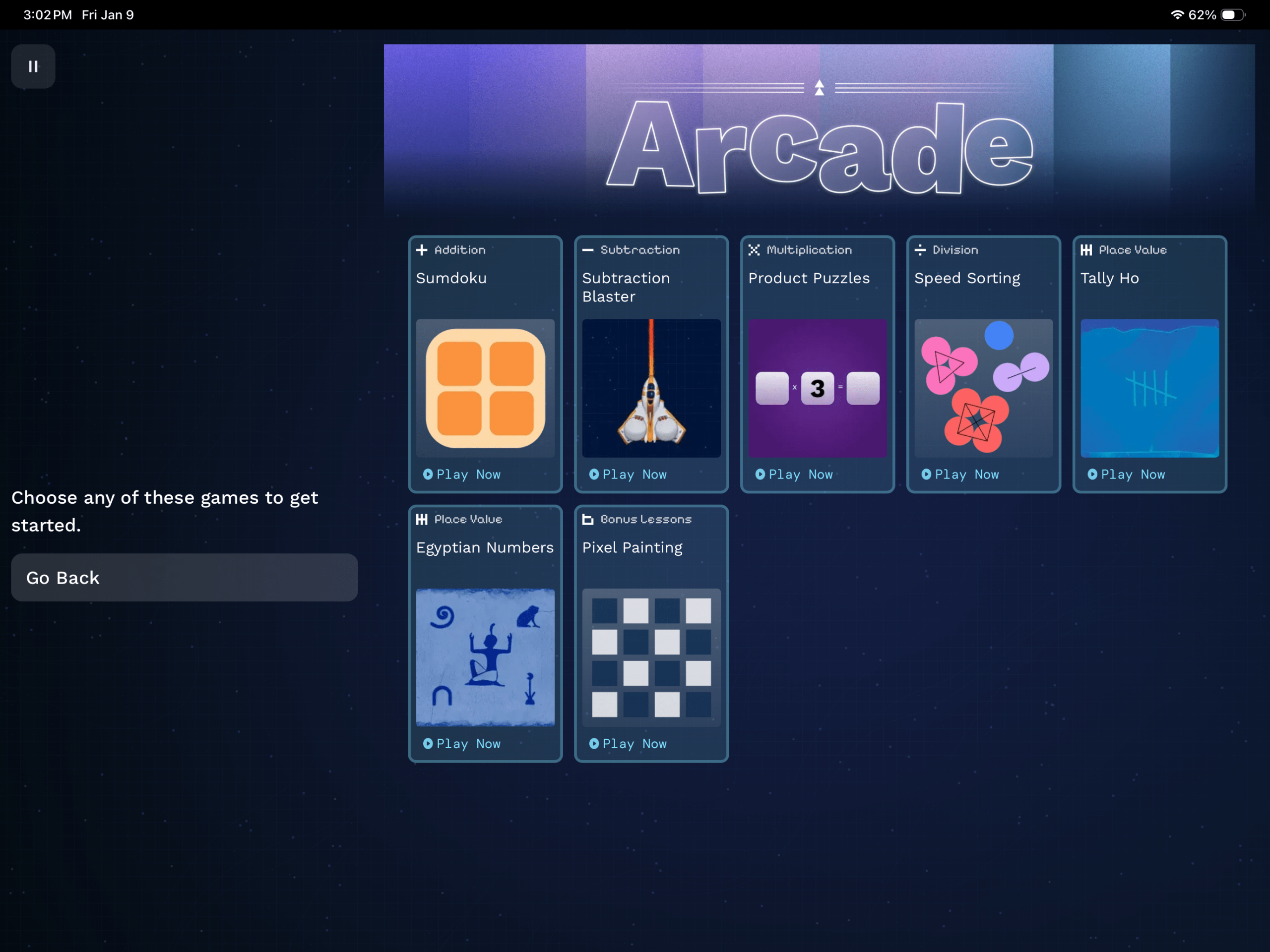
Synthesis Tutor’s strongest attribute is the quality of its lesson design. The platform delivers math instruction in ways that feel engaging, visual, and conceptually rich. Separating instructional content from optional math based games reflects a pedagogically sound approach that avoids over gamification.
- Limitations
Limitations include a narrower content scope compared to large assessment driven platforms, limited visibility into educator facing tools, and the possibility that advanced learners may move through available material relatively quickly.
Final Verdict
Synthesis Tutor is a well designed and engaging math learning platform that excels at teaching elementary concepts through thoughtful visuals and adaptive pacing. It is not a replacement for a core math curriculum, but it fills an important role as a differentiated learning tool for families, microschools, and targeted school based use.
At its current price point, it offers strong value for students who benefit from engaging, concept focused instruction. With continued content development and clearer pathways for educator use, Synthesis Tutor has the potential to become a standout supplemental math resource.